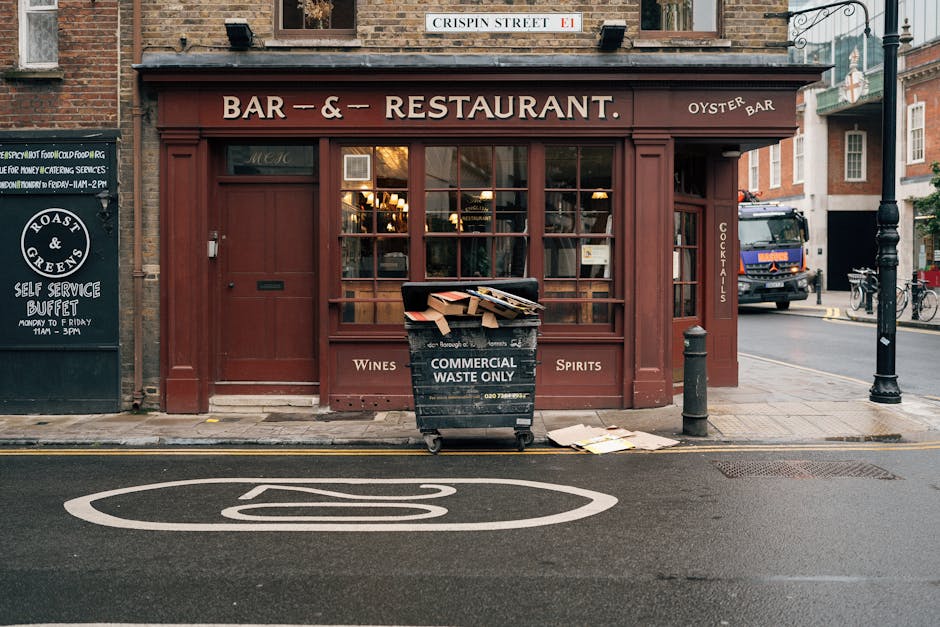
Office rubbish removal for Loughton businesses on High Road
If you run a business on Loughton High Road, office rubbish has a way of building up quietly. One broken chair in the corner, a few boxes of old files, a printer nobody uses anymore, and then suddenly the back room feels like a storage cupboard. Office rubbish removal for Loughton businesses on High Road is really about restoring control: clearing space safely, keeping work flowing, and making sure unwanted items are handled properly without turning a normal working day into a disruption.
That sounds simple, but in practice there are a few moving parts. Offices create a mix of waste streams, from general rubbish and packaging to desks, shelving, electronics, confidential paperwork, and bulky items. Some things can be taken away quickly; others need more care. If you are trying to decide what to do, how to do it, and what to expect, this guide breaks it down clearly and without the fluff.
We will look at how office clearance works, what counts as rubbish removal in a business setting, what to watch for on a busy street like High Road, and how to keep the process tidy, compliant, and efficient. A little planning goes a long way here. Honestly, it can save you far more time than people expect.
Table of Contents
- Why office rubbish removal on High Road matters
- How the process works
- Key benefits and practical advantages
- Who this is for and when it makes sense
- Step-by-step guidance
- Expert tips for better results
- Common mistakes to avoid
- Tools, resources and recommendations
- Law, compliance, standards, or best practice
- Options, methods, or comparison table
- Case study or real-world example
- Practical checklist
- Conclusion
- Frequently asked questions
Why Office rubbish removal for Loughton businesses on High Road Matters
On a lively commercial street, office waste is not just an eyesore. It affects how a business feels to visitors, how smoothly staff can move around, and how quickly a workplace can adapt when things change. If you have ever tried to squeeze past a stack of old monitor boxes while answering the phone, you will know the problem. It is awkward, messy, and slightly ridiculous.
For businesses on High Road, the location adds an extra layer of pressure. Footfall, deliveries, customer visits, and nearby trading all mean that clutter stands out more than it would in a hidden back-office unit. A clear office supports a better first impression, but it also helps with safety and day-to-day efficiency. People find files faster. Cleaning is easier. Fire exits are less likely to be blocked. Small things, yes, but they add up.
There is also the practical side of disposing of commercial waste correctly. Office rubbish often includes materials that should not simply go in a mixed bin bag and be forgotten about. Cardboard, furniture, electronics, metals, confidential paper, and general refuse all need different handling in many cases. If you are not careful, it becomes more expensive and more complicated later. That is why many local businesses prefer a planned clearance rather than a last-minute scramble.
Expert summary: The best office rubbish removal is not just about taking waste away. It is about sorting it sensibly, clearing it at the right time, and leaving the workspace safer, cleaner, and easier to run.
How Office rubbish removal for Loughton businesses on High Road Works
The exact process depends on the size of the office and the type of items involved, but a good removal service usually follows a clear pattern. First comes an assessment. Then comes planning. Then collection. Simple enough on paper, though the real value is in how smoothly each step is handled.
In many cases, the process starts with a quick conversation about what needs removing: desks, chairs, old filing cabinets, shelving, packaging waste, archived paperwork, computers, broken fixtures, or a full office clear-out. That initial detail matters because office rubbish removal is rarely one-size-fits-all. A tidy start means fewer surprises on the day.
For a High Road business, timing matters too. You may need a collection early in the morning, between customer appointments, or after trading hours. Some offices need the work done in stages so staff can keep using the space while clearing happens around them. Others want a full strip-out because the lease is ending, the team is relocating, or the layout is being refreshed.
Once the waste is collected, it is typically separated where possible. Reusable furniture may be handled differently from broken items. Recyclable materials are often sorted from general rubbish. Items that need specialist treatment, such as electronics, should be identified early rather than left until the last second. That avoids delays and, just as importantly, avoids headaches.
If you already know that the job is more than a simple bin run, it may help to look at a dedicated office clearance service alongside broader business waste removal options. For larger mixed loads, a general waste removal approach can also be useful, especially when the office is dealing with different waste types at once.
Key Benefits and Practical Advantages
Let's face it, nobody gets excited about rubbish removal. But the benefits show up quickly once the clutter disappears. The biggest one is space. Offices work better when they can actually breathe a bit. You notice it in the small things: easier movement, cleaner desks, less visual noise, fewer awkward obstacles in the hallway.
There is a productivity benefit as well. Staff spend less time working around clutter and more time doing the work they were hired to do. That sounds obvious, but offices often accumulate "temporary" items that stay for months. One spare cabinet, then a broken office chair, then a box of cables nobody has checked. Before long, it is part of the scenery. Not ideal.
Then there is reputation. A tidy office can help reassure clients, suppliers, and visitors that the business is organised and cares about detail. That matters on High Road where first impressions are formed quickly. People notice the reception area, the smell of stale cardboard, the pile of dead hardware by the wall. They do.
Some other practical advantages include:
- reduced trip hazards and blocked walkways
- faster office moves, refurbishments, or reconfigurations
- better use of storage space
- easier cleaning and maintenance
- more straightforward waste sorting and recycling
- less stress for managers and admin teams
If the clutter includes old desks, cabinets, sofas, or worn seating, the job can overlap with furniture clearance or furniture disposal. That is often the case in real offices, because "rubbish" is not always just rubbish. It is usually a mix.
Who This Is For and When It Makes Sense
This kind of service is relevant to a lot more businesses than people first expect. Small professional offices, shared workspaces, accountancy firms, retail back offices, agencies, clinics, consultancies, estate agents, and local service businesses can all end up with the same problem: useful space being eaten up by unwanted stuff.
It often makes sense when you are:
- moving office
- reducing headcount and no longer need as many desks
- replacing furniture or IT equipment
- preparing for a lease end or inspection
- clearing out a storage room that has become a dumping ground
- renovating or rebranding the workspace
For some businesses, it is not even a major event. It is just housekeeping, but on a commercial scale. A back office can slowly collect broken items, surplus packaging, archived files, and old promotional materials. Then one day the storage cupboard has become the office equivalent of a garage in winter. You know the feeling.
If your team has already started sorting things into "keep," "recycle," and "go," you are probably at the right stage to organise removal. If not, the process can still be broken into manageable steps. No need to make a drama of it.
Step-by-Step Guidance
Here is a practical way to manage office rubbish removal without chaos.
- Walk the space first. Check each room, storage area, and shared corridor. Make a note of bulky items, mixed waste, and anything sensitive.
- Separate by category. Put furniture, general rubbish, paper waste, electronics, and confidential material into different groups where possible.
- Identify access issues. Look at stairs, lifts, narrow doorways, parking, and loading points. On High Road, access can be the bit people forget until collection day.
- Decide what must stay until the end. Some items cannot be removed until staff are done using them. Printers, routers, and essential storage often fall into this group.
- Arrange the collection window. Pick a time that causes the least disruption. Early mornings or quieter trading times usually work well.
- Protect sensitive information. Paper records and storage media should be handled carefully. If in doubt, keep them separate from general rubbish until the plan is clear.
- Check the final sweep. Once waste is removed, do a quick walk-through to make sure cables, fixings, and overlooked debris are not left behind.
That final sweep matters more than people think. It is easy to miss one small pile in the corner and then find it later when the office has been rearranged. A quick check saves the awkward "oh, that's still here" moment.
Expert Tips for Better Results
From experience, the cleanest office clearances are the ones that are planned in the background before anybody starts moving heavy things. A little prep makes the collection quicker and safer. It is not glamorous, but it works.
Tip one: label everything that is definitely going. It sounds basic, but a labelled stack is much easier to deal with than a room full of vague "maybe" items. If staff know what stays and what goes, confusion drops fast.
Tip two: clear floor space before the team arrives. Even moving a few chairs and bins out of the way can save a surprising amount of time. You will notice the difference immediately, especially in tighter offices.
Tip three: be realistic about mixed waste. Office jobs often include a combination of general rubbish, old furniture, broken equipment, and packaging. If you try to treat everything as one simple pile, delays tend to appear. Not always, but often enough.
Tip four: think about recycling early. If you already know what can be reused or recycled, the clearance becomes much more efficient. For businesses that want to keep waste handling aligned with wider sustainability goals, it is worth looking at recycling and sustainability as part of the bigger picture.
Tip five: keep the staff informed. Nobody likes arriving to find their chair has vanished or their paperwork has been moved. A short email before the clearance goes a long way. Simple, polite, sorted.
Common Mistakes to Avoid
Office rubbish removal sounds straightforward until one of the classic mistakes shows up. The first is waiting too long. Businesses often hold off until the clutter is visibly annoying, and by then the job is bigger than it needed to be. A little earlier is usually better than a big clean-up at the last minute.
The second mistake is failing to sort sensitive items. Old files, hard drives, and documents are not the same as cardboard or broken furniture. If confidential material is mixed into a general pile, it creates avoidable risk. That is one area where a careful approach really matters.
The third mistake is underestimating access. High Road is not always a problem on its own, but busy streets, parking restrictions, shared entrances, and upstairs offices can complicate collection. If access is tight, mention it early. It saves everybody a bit of faff.
Another common issue is assuming all waste can go out the same way. Electronics, bulky furniture, and mixed waste may need different handling. Even if the final removal is handled for you, the office still benefits from a basic sort beforehand.
And one more, because it happens a lot: forgetting the hidden spots. Behind cabinets, under desks, in old storage cupboards, under piles of old folders. That is where the "surprise" rubbish tends to live.
Tools, Resources and Recommendations
You do not need a complicated toolkit to prepare for office rubbish removal, but a few simple items help a lot. A marker pen, labels, strong bags, tape, and a shortlist of what should be removed can make the whole process smoother. Nothing flashy. Just useful basics.
A digital inventory can be handy too. A quick spreadsheet listing desks, chairs, cabinets, electronics, and paperwork boxes gives you a cleaner view of the job. If the office manager is juggling other tasks, even a simple phone note list can be enough. The goal is clarity, not perfection.
If the job includes bulky or mixed waste, it can be helpful to compare it with other commercial clearance needs. For example, office refits sometimes create waste similar to a refurbishment, which overlaps with builders waste clearance. That is especially true where partitions, fittings, or old fixtures are being removed. Not every office job needs that level of support, but some do.
For businesses looking to understand the service side in more detail, the company's own about us page can help set expectations about how the team works, and pricing and quotes is useful when you want a better sense of how the job is usually scoped. If you are ready to talk through a specific clearance, the contact us page is the logical next stop.
Law, Compliance, Standards, or Best Practice
When office rubbish removal involves a business, compliance is part of the picture. That does not mean every clearance is legally complex, but it does mean waste should be handled carefully and sensibly. In the UK, businesses are expected to manage their waste responsibly and use appropriate processes for disposal, recycling, and transfer. If that sounds a bit dry, fair enough, but the practical takeaway is clear: do not treat business rubbish like a household tidy-up.
Confidential information should be protected. Electronics should be separated where needed. Hazardous or unusual items should be identified in advance rather than quietly slipped into the nearest pile. If you are unsure about a particular item, stop and check before it is moved. That small pause can save a lot of trouble.
Health and safety matters too. Heavy office furniture can cause injuries if it is lifted badly. Corridors, stairs, and entrances need to stay clear. Staff should not be expected to drag awkward items through a busy office while answering phones and dodging lunch breaks. That is not efficient, and it is not especially sensible either.
Good practice also includes insurance awareness, clear communication, and respect for building rules. If your office is in a shared block or managed premises, make sure the clearance plan fits around access requirements and any site procedures. The service provider should be able to work within that framework without making a song and dance about it.
For businesses that value procedural clarity, the site's health and safety policy, insurance and safety, and terms and conditions can help with the trust side of the decision. If your organisation wants reassurance about data handling, the privacy policy may also be useful to review.
Options, Methods, or Comparison Table
There are a few ways a business can deal with office rubbish. The best option depends on time, volume, and the type of waste involved. Here is a simple comparison.
| Method | Best for | Pros | Limitations |
|---|---|---|---|
| Internal staff clearance | Very small volumes and simple items | Low direct cost, easy to start | Time-consuming, manual lifting, risk of poor sorting |
| Scheduled business waste removal | Ongoing office waste and recurring clear-outs | Predictable, tidy, easier to manage regularly | May not suit bulky one-off items |
| Full office clearance | Moves, refurbishments, end-of-lease clearances | Comprehensive, fast, less disruption | Needs more planning and coordination |
| Mixed waste clearance | Offices with furniture, general waste, and oddments | Flexible, practical for real-world office clutter | Sorting still helps the process run better |
In truth, many businesses end up using a combination. A team might handle everyday waste internally, then book a bigger clearance when the office changes shape. That is often the neatest way to do it.
Case Study or Real-World Example
Picture a small professional office on High Road that has been gradually shrinking its storage area. Over the years, it has kept spare chairs, outdated desk units, a dead printer, box files, old promotional stock, and a few bits of equipment "just in case." By the time the business decides to refresh the space, the back room is packed from floor to shoulder height.
The manager does a quick walk-through and sorts items into four groups: keep, recycle, remove, and check later. Staff are told to clear their own desks first. The old furniture is separated from paper waste, and the electronics are kept aside for special handling. Nothing dramatic, just a methodical approach.
On collection day, the clearance is far smoother because the access route is clear and the items are already grouped. The office ends up with more room for storage, cleaner sightlines, and a reception area that feels calm rather than cramped. It is not a miracle. It is just good preparation. But the difference is obvious the moment you step inside.
That kind of outcome is typical when businesses take a little care before the rubbish is removed. And yes, there is always one forgotten box behind the cabinet. Always.
Practical Checklist
Use this checklist before arranging office rubbish removal for your Loughton business on High Road:
- Walk every room, storage area, and shared space
- Separate general rubbish from furniture and electronics
- Identify confidential files and remove them from mixed waste
- Note any bulky or awkward items that may need extra planning
- Check stairs, lifts, parking, and loading access
- Confirm the best time for minimal disruption
- Tell staff what should stay and what should go
- Label items clearly where needed
- Keep fire exits and corridors unobstructed
- Do a final sweep after collection
If the office is part of a wider business move, it can also be worth reviewing related support such as office clearance and, where furniture is being replaced, furniture disposal. Small details, but they keep the whole job neat.
Get a free quote today and see how much you can save.
Conclusion
Office rubbish removal for Loughton businesses on High Road is really about keeping the workplace usable, safe, and presentable without turning waste into a constant distraction. If you manage it well, the benefits are immediate: more space, less clutter, fewer hazards, and a smoother working day for everyone involved.
The best results usually come from a simple mix of planning, sorting, and choosing the right level of support for the job. Some offices only need a small clear-out. Others need a full reset. Either way, the key is not to leave waste hanging around longer than necessary. That is where the mess grows teeth, as they say.
For a business on High Road, a clean and organised office does more than look better. It feels better to work in. And that matters, every single day.
Frequently Asked Questions
What counts as office rubbish removal for a business in Loughton?
It usually includes general office waste, bulky items, unwanted furniture, packaging, old files, and sometimes electronic equipment. In practice, it is any unwanted office material that needs to be removed safely and properly.
Can office rubbish be removed during business hours?
Often yes, but many businesses prefer early morning, quieter periods, or after-hours collection to reduce disruption. The best timing depends on your layout, staff levels, and access arrangements.
Do I need to sort office waste before collection?
It helps a lot. Sorting furniture, paper, electronics, and confidential material makes the job quicker and can reduce avoidable risk. Even a rough sort is better than none.
What should I do with old desks and office chairs?
Keep them separate from general rubbish if possible. Bulky furniture is often handled differently from loose waste, and separating it early makes the process cleaner and more efficient.
How do I handle confidential paperwork?
Keep it separate from normal waste and make sure it is dealt with securely. Do not leave sensitive files mixed into open bins or unsorted piles. That part is worth taking seriously.
Is office rubbish removal suitable for small businesses?
Yes. In fact, small businesses often benefit the most because clutter can build up quickly in a limited space. A small office does not need much waste before it starts feeling cramped.
What if my office is upstairs on High Road?
That is common enough. Access details such as stairs, lifts, narrow corridors, and parking should be mentioned in advance so the clearance can be planned properly.
Can old electronics be taken away with other office rubbish?
Sometimes they can be collected as part of a mixed clearance, but electronics usually need separate attention. It is best to identify them early so they are handled correctly.
How can I tell if I need full office clearance rather than simple rubbish removal?
If you are moving out, refitting the space, or clearing a large amount of furniture and mixed waste, full office clearance is usually the better fit. If it is just a limited amount of rubbish, a smaller removal may be enough.
What makes High Road office clearances different from other areas?
Busy street access, nearby traffic, customer footfall, and loading considerations can all affect timing and logistics. It is not complicated, but it does need a bit more thought than a quiet backstreet job.
How can I make the removal quicker and easier?
Label items, clear access routes, separate waste types, and decide what must stay before the team arrives. A few minutes of preparation can save a surprising amount of time later.
Where can I learn more about the company and its approach?
You can review the company information on the about us page, and if you want to discuss a specific job, use the contact us page. For payment details and reassurance around transactions, the payment and security page is also useful.