House Clearance in Loughton
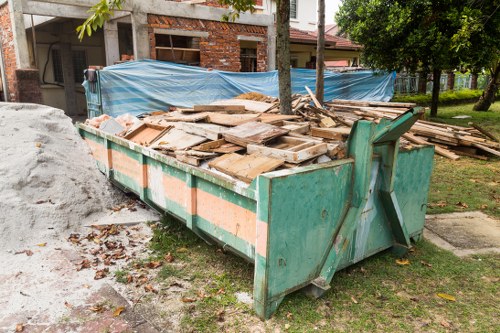
We provide house clearance in Loughton for homes that need a careful, organised removal of furniture, household items and general contents. The service is designed for customers who want an efficient way to clear rooms, empty properties or prepare a house for its next step without having to manage the sorting and movement alone. We work with domestic properties of different sizes, from a single cluttered room through to fuller clearances involving several floors.
Our approach is straightforward and practical. We separate items that can be removed, identify anything that needs special handling, and clear spaces in a way that keeps the work controlled. That means attention to access, stairways, fragile pieces and the order in which rooms are tackled. If you are comparing options, clear communication and a sensible plan matter as much as the removal itself, especially where there are bulky items or mixed contents to deal with.
For a quote, you can start by outlining the property type, the rooms involved and the main items that need clearing. A short description is often enough to begin a discussion, and photographs can help when the job includes awkward furniture or multiple areas. If you are ready to arrange the work, get in touch for a quotation.
Domestic clearance for houses, flats and occupied homes
Domestic clearance often needs a flexible approach because each property presents different combinations of furniture, appliances, personal effects and stored items. A house may need several rooms cleared in sequence, while a flat may require more attention to access, carrying routes and shared entrances. Our service is suited to situations where the contents need to be removed carefully rather than rushed, and where the customer wants the work handled by a team that can manage the practical parts from start to finish.
We can clear the main living spaces, bedrooms, kitchens and ancillary areas where items have built up over time. In some homes, the emphasis is on bulky furniture and white goods; in others, the task is mostly sorting and removing mixed household belongings. Planning the order of work helps reduce disruption, particularly when there are items that should stay in place, doors that are narrow or stairs that limit movement. That is why it is useful to identify any pieces that are staying and anything that needs special care before the work begins.
Common domestic clearance tasks include removing sofas, beds, wardrobes, tables, shelving, boxed belongings and general unwanted contents. Depending on the property and the volume involved, the clearance may be completed as part of a broader tidy-up or as a focused one-off removal. Our service can also help when a home is being prepared for sale, rental, refurbishment or a change in occupancy. If you want to explore the options, our team can talk through what is included and how the work would be carried out.
Household furniture and item removal

Furniture removal is often the core of a house clearance, particularly where larger pieces take up most of the available space. We remove items such as sofas, armchairs, beds, mattresses, cabinets, wardrobes and dining sets, along with smaller pieces that are no longer needed. The practical challenge is not only lifting the items, but moving them safely through the property without causing avoidable damage to walls, flooring or fixtures.
Some furniture is straightforward to remove as a single item, while other pieces may need to be dismantled or carried in sections. We treat each job according to the layout of the home and the type of item involved. Where a room contains a mixture of heavy and lightweight pieces, the sequence matters: larger items are usually taken out first to open up access, then smaller items can be sorted and removed more efficiently. This keeps the clearance more controlled and helps the remaining space become easier to manage.
If you are weighing up what to keep and what to remove, it can help to group items by room or by type before the clearance takes place. That does not mean you must sort everything in advance, but it can make the process more efficient when the property contains several layers of furniture and belongings. Good access information is useful too, especially if there are parking limitations, communal hallways or stair-only access. Share the details that affect the work, and we can respond with a suitable quotation.
Clearance for lofts, garages and storage-heavy spaces
Lofts and garages often become the places where unused belongings accumulate, so clearing them can feel different from clearing the main living areas. These spaces may contain old boxes, broken furniture, seasonal items, tools, decorations and materials that have been stored for a long time. A good clearance service needs to handle those mixed contents carefully, because the work is usually as much about sorting access as it is about lifting and removal.
Garage clearance can involve heavy or awkward objects, including shelving, worn-out household items, sports equipment and general clutter that has built up around the edges of the room. Loft clearance may require more caution because of the limited headroom, the access hatch and the need to work safely around insulation, joists and low light. We approach these jobs methodically, moving from easier items to more awkward ones so the space can be cleared without unnecessary strain or disruption.
If there are items you want to keep, it helps to separate them before the clearance starts or indicate them clearly. That can be especially useful in lofts and garages where long-term storage means that similar-looking boxes or mixed piles can be hard to distinguish. For many customers, the goal is to regain usable storage space and remove the items that no longer have a place in the property. A short call or message can be enough to begin a quote request.
How our house clearance process is organised

House clearance works best when it follows a clear order. The first step is to understand the scope of the job: which rooms are involved, what kinds of items are present and whether there are any access considerations. After that, the work can be planned room by room or by item type, depending on what makes the property easiest to clear. This practical approach helps keep the process tidy and reduces the chance of unnecessary handling.
Preparation is simple when the main details are known in advance. A brief description of the rooms, a note about any particularly large pieces and an outline of access arrangements are often enough to shape the quotation. If photographs are available, they can help illustrate the volume and type of items, but they are not always essential. The point is to provide enough information for an accurate estimate and a sensible plan, not to create extra work for the customer.
In some cases, the property may be partly occupied, with a mix of items that should stay and items that need to go. In others, the clearance may involve mostly empty rooms with only a few remaining contents. Either way, the process should remain clear and orderly, with the relevant items removed and the rest left undisturbed where agreed. If the work sounds suitable, you can ask for a quotation and describe the property in a few practical lines.
Items, access and useful decisions before the job starts
Before a clearance begins, it is helpful to think about the categories of items involved, because different contents may need different handling. Furniture, small household items, boxed belongings and broken pieces are all handled differently in practice, even if they are being removed in the same visit. Identifying any especially heavy, fragile or awkward items makes it easier to plan the right order of work and to avoid delays once the team is on site.
Access matters too. Narrow staircases, upper floors, tight hallways and shared entrances can all affect how the clearance is carried out. Parking distance and carrying routes may also influence the approach. These are practical details rather than obstacles, but they help define the time and effort involved. If the property contains items that should be left in place, it is useful to make that clear beforehand so the clearance can be directed accurately.
Typical points to mention when requesting a quotation include the number of rooms, the main types of contents, whether there are large pieces to move and whether the property has any access limitations. If the job involves a loft, garage or outbuilding as well as the main house, that is worth noting too. You do not need a long explanation to begin; a concise summary is usually enough to get the conversation started.
About Loughton
Loughton is a town in Essex within the Epping Forest district, positioned on the edge of the London suburban area and closely linked to the wider Epping Forest landscape. The settlement grew significantly with the expansion of transport in the nineteenth and twentieth centuries, yet it still retains a distinct mix of older streets, residential development and open green surroundings. One of its most notable nearby features is Epping Forest itself, a large historic woodland that shapes the character of the area and provides extensive walking, wildlife and recreational opportunities. The town centre includes a range of shops and everyday services, while residential neighbourhoods spread outward through streets of varied age and style. Parts of the built environment show the transition from earlier village origins to later suburban growth, with housing estates and infill development sitting alongside older properties and local landmarks. There are also cultural and community features associated with the town, including places of worship, schools and local venues that support everyday life. Loughton station, on the Central line of the Underground, has long been an important transport link, connecting the town with London and other parts of the network. Nearby green corridors, parkland and woodland paths add to the sense that the town sits between urban and rural settings. That combination of transport access, historic growth and close contact with open space gives Loughton a character that is both practical and distinctive, with a landscape shaped by commuting, conservation and long-established local settlement patterns.
House clearance for moving, refurbishment and property changes
Clearance work often becomes necessary when a property is changing hands, being refurbished or prepared for a new use. In those situations, the aim is usually to remove unwanted contents in a way that leaves the space ready for the next stage. That might mean clearing everything from a house, or it might mean removing selected items before decorating, repairs or a sale. The service is useful whenever the property needs to be stripped back to a cleaner starting point.
Some customers need a clearance before letting agents, contractors or estate professionals can proceed with their own work. Others simply want to reduce the amount of clutter in the property before making decisions about what remains. Either way, the value of the service lies in reducing the physical burden on the customer and giving the house a clearer structure for the next step. We can help with the removal of furniture, room contents and storage items as part of that process.
Where useful, items can be grouped into what is to stay, what is to be removed and what needs a closer look before disposal. That is not about creating extra administration; it is about making the work more manageable and ensuring that agreed items are handled properly. If your property is at a stage where a clear-out would help, this is a suitable time to ask for a quotation and discuss the rooms involved.
What affects the scope of a clearance quotation

Quotation details are usually shaped by the amount of work involved, the type of items present and the conditions on site. A room full of lightweight boxes is very different from a room containing several heavy wardrobes or a mix of furniture and awkward storage pieces. The more clearly the contents are described, the easier it is to estimate the time and effort needed for the clearance. That is why practical information is more helpful than broad general statements.
Access can also influence the scope of the job. A ground-floor room with direct access will normally be simpler to clear than a top-floor loft space reached by narrow stairs. Shared access, controlled entry points and limited parking can all add to the work, even when the contents themselves are straightforward. This is not unusual; it simply means the quotation should reflect the real conditions of the property rather than an assumed layout.
To help with planning, you can note whether the items are already gathered in one place, whether they are spread across several rooms and whether any pieces need special care. You can also mention if the property includes a garage, loft, shed or similar space. A sensible quotation begins with facts about the contents and access, then turns those details into a clear plan for the removal. If you want that process to begin, please request a quotation.
Waste handling, sorting and responsible removal
House clearance is not simply a matter of moving everything out at once. The contents of a home usually contain a mix of furniture, reusable household items, broken pieces and general material that needs to be separated as part of the removal process. Sorting helps ensure that the clearance is handled in a controlled way and that different item types are managed appropriately. This is one reason an organised clearance is better than an unplanned rush.
Where there are bulky items mixed with smaller belongings, the work may be organised so that the larger objects are removed first and the remaining items can then be sorted more easily. That sequence can make a property safer and simpler to work in, particularly when rooms are crowded. It also helps when the clearance covers several spaces, because the work can progress logically rather than creating extra disruption from room to room.
Some customers only need a partial house clearance, while others need most or all of the contents removed. In both cases, the same core principles apply: accurate scope, careful handling and a practical outcome that leaves the agreed areas clear. If you have a mixture of item types and are unsure how much needs to go, it is fine to describe the situation in plain language. A brief discussion can then shape the right approach and quotation.
Furniture clearance and room-by-room clearing

Furniture clearance can be arranged as part of a full house clearance or as a more targeted service for specific rooms. Some customers only need large items removed from living rooms or bedrooms, while others want multiple pieces cleared from across the home. The service is useful when furniture is no longer needed, has been replaced, or is simply taking up space that needs to be used differently.
Room-by-room clearing is often the easiest way to manage a property that contains a broad mixture of contents. It allows each area to be dealt with in turn, which helps with organisation and makes it easier to confirm which items are staying. This can be particularly helpful in houses with several bedrooms, loft storage, spare rooms or converted spaces. A structured approach keeps the work simple and avoids confusion about what should remain on site.
If you are comparing options, think about whether you need a targeted furniture removal or a wider house clearance. Choose the level of service that matches the property, not just the largest item in the room. Once the scope is clear, it becomes easier to plan access, timing and the order of removal. For a straightforward next step, you can contact us to request a quotation and outline the rooms involved.